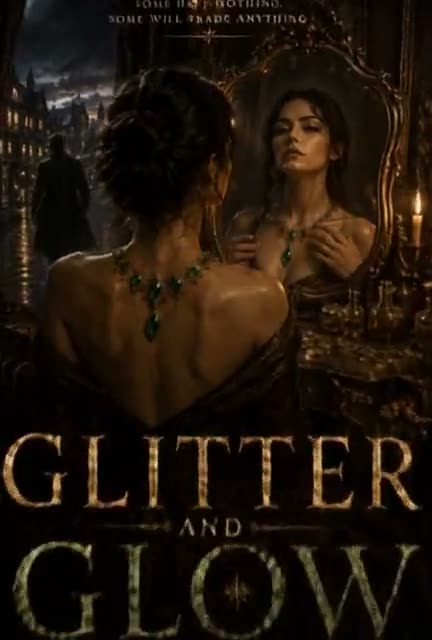
Darlion wasn’t pretty, but she wasn’t ugly either. A tanned face and arms a shade lighter gave her the look of someone who belonged somewhere hot. Where she belonged was the magistrate’s house in Grist — a milling town in the Ashmarch, on the river, prosperous, and the finest house in it.
She lifted a mirror from the bedstand, weighed its quality out of habit, and glanced at the empty bed behind her. Her husband, Halden Kline, magistrate of Grist, had left for work early. In the glass she found the small scar above her left eyebrow — the one flaw on her face, nothing much, but the kind of thing she’d have priced down in anyone else. She let the mirror fall to the covers and crossed to the full-length one by the night stand.
Well, girl, she thought, patting her body down through her thin shift nightdress. I think I still have it. Lean, her figure, and she had always loved that — her mother’s build, the athletic curves that came with it.
She dropped her shift and stood naked before the mirror. Her left hand traced her neck, stopping at the green jewelled necklace her new husband had given her, then moved lower to the edge of a breast. Glitter. Her hand slid down to the flat of her belly and stopped. Or glow.
“You liked me not long ago,” she said.
She made his lunch the way she made it every day, and carried it across the square the way she did every day, and the guard on his door smiled at her the way he always did. She smiled back. He shook his head. Don’t.
She opened the door anyway, in time to watch her husband haul up his britches. He had been entertaining a woman — pretty, dripping gold and silver, regal to look at and, even from the doorway, to smell.
“What are you doing here?” he snapped, caught out.
“Your lunch.” She set the basket she’d spent the morning on down on the side, and looked at the other woman.
The woman rose from her knees, wiped her mouth, and laid a fat pouch of coin among the clutter of the desk — a carved, gilded thing, too grand for the room, like everything Halden owned. “So. It’s ours?”
“It’s yours.”
She glanced at the wife. “Until next time?”
Halden waved her out, and didn’t answer.
He went back to his papers and let her stand there. It was the richest room she knew — gilt on the cornices, a rug too fine to walk on, a decanter catching what light there was — and all of it, she had realised, still owed for. A magistrate had to look like a magistrate, and looking cost more than the office paid. That was what the pouch on the desk was for. That, she was beginning to see, was what she was for.
At last he spoke. “Look, you are—” He caught himself. “You have nothing but your looks. I need gold, and I need a son. You’ve given me neither.” He nodded at the basket without looking at it. “And lunch I can’t spend.”
“Then why buy me?”
He didn’t look up. “You were better stock than what’s usually on offer.” The conversation, for him, was over.
She held back the tears and smoothed her dress, and smoothed it again, like a mother bird settling her feathers. He looked up — not at her, at the noise of it, and at the fact she was still there. “Don’t forget where that came from.” The quill jabbed, end-first, at the dress. “Now go. Keep the house, or whatever it is you do.” After that, only the scratch of his pen.
She left. Glitter or glow. She had failed at both. She would make her own.
She liked the freedom of the traders’ post. The Vhelt spoke little — their language was more signs than words, and words came hard to them, for one word on a hunt could cost a meal. For what she wanted, though, she needed words.
She walked past the human-sized cages, past the one lone missary that filled one of them, to a beige tent — tee-pee shaped, quick to raise, quick to strike, quick to move. At the flap she announced herself the old way: a click of the tongue and a word no outsider would know. I am one of you. You owe me time. Her mother had been Vhelt — it was in her blood, along with the build and the colouring — her father some soldier bought for a night, which had never troubled her. The word was hers to use, and it opened what gold could not.
“Come.” The voice came thick and careful, a man working at sounds that fought him. She stepped inside, wearing more gold and finer cloth than the post had seen in a season — more, perhaps, on her body alone, than the whole trading ground was worth.
Inside, the air was thick — sweat and smoke and something sweet and low they burned, that caught at the back of her throat. Her eyes adjusted to it: the low fire, the furs, the man watching from the far side. Her fingers found the green stone at her throat. She knew her plan.
The master trader laughed at her first price. He laughed at her second. He had eyes for the necklace and none for her words.
If not words — then what about actions? She had watched the woman in Halden’s office rise from her knees; she knew men liked it. If her mouth was not for words, it might still seal the deal.
Her hands moved to his belt as she said her first price again, plainly, as though it were the only figure on the table. He smiled and moved closer.
She closed her eyes and thought of the gold. The smell of another man filled her, and she fought not to gag at what she had lowered herself to. Then the thought of Halden — Glitter or glow — took over, and she moved faster.
When it was done she wiped her mouth the way the other woman had, and hated that her hand already knew the gesture.
The trader was loose now, and generous, and finished with haggling. He weighed out a pouch that made her breath catch — far more than she had dared name, far more, she was sure, than the thing was worth. She looked at the coins, and she looked at what she had just done to earn them, and the disgust climbed her throat. Then the weight of the pouch settled into her palm, and the disgust went quiet the way a small sound goes quiet beneath a larger one.
The last time, she told herself. She almost believed it. Halden would never miss the necklace — she had other trinkets. And she had, for the first time in her life, coin that was hers.
The Vhelt were a proud clan, revered for their tracking and hunting. But like anyone they had learned other trades too — how to deal, how to price a thing truly, how to seize a chance when it came. Zedon, who ran this trading post, was sharp on two of those counts: tracking and hunting. On the rest — well, less so. He was still learning.
His task out near Grist was to keep his chief’s trade running, nothing more — but this was his chance to shine. He knew the green stones were prized: they stood for life, and a woman who wore them while she carried a child was protected. Or so the stories went.
Zedon was still turning over the more lustful part of the transaction when a commotion started outside. He tucked the necklace into the skin pocket inside his coat and moved towards the noise. A rat scurried through the door flap; he made to jump on it, more from a start than anything, and a dog followed — a black-and-tan thing, short and stubby, wiry-furred. He hated the dogs. Beggars, the lot of them, bringing nothing to the hunt, nothing to the clan; since the big war dogs died out, nothing compared, and these were barely more than rats themselves. He kicked absently at it. It yelped — but instead of shrinking away it turned from the rat and leapt at him, unafraid, landing at pocket height. Zedon pushed it off, half admiring the fury of it, the lack of fear, and put it out of the tent with more care than he would usually show.
The leap had done its work. The necklace, knocked half out of the pocket, spilled loose — unseen at first, then seen, and Zedon grabbed for it and missed. He sucked his teeth. It struck the wooden table, crumpled in its own chain, and dropped to the stone floor. He stooped and picked it up, cursing the effort of bending, examined it, found it all in order, and gave it a wipe.
A small piece broke off in his hand — a chip of green so tiny he might never have known it, had he not gone to rub his eye. It glinted on the end of his nail. He studied it. Then he smashed the necklace against the edge of the table. The gold held. The glass did not. The value had been in the stones — and the stones were glass.
The Vhelt leader roared, hurled the necklace into a basket, and stomped outside.
The Vhelt tolerated most things. Cheating was not one of them.
The hunt went as their hunts went. The woman of their blood but no honour was run down near the big mill on the hill; she made for a big red door, found it barred to her, and was overpowered and dragged to the edge of camp. The trackers had no patience for the kicking and screaming — a clout round the head bought silence — and they carried her back to the post like game, to be strung up and quartered.
She woke there — tied to a wooden cross, a short X of timber, by the wrists. Fear hit at once. Death would be kind next to this. This was the tribe’s klemshaft: a word no outsider knew, because any outsider who had seen it done was dead, having been the one it was done to.
Warm wet ran down her leg, her own, as the lead trader came closer. “Please,” she whimpered. “What have I done?”
The necklace landed on the ground below her — green glass smashed, chain destroyed. “Tricker,” the man said. He weighed the word, then tried it slower. “Tricked me.”
She saw the stones — her necklace, and not. Then the trick landed on her: Halden had given her cheap glass wrapped in gold, and she had never once seen it.
“Not mine,” she said.
Zedon moved closer, his dagger drawn now. “Trick—”
She cut him off. “NOT mine.”
He hit her hard across the head. Her life narrowed to a point; there was no way out of this. And there was Halden, laughing, a woman at his knees, her head bobbing — and her own head doing the same, the words glitter and glow drifting past like leaves on water. Halden, laughing. And she snapped.
“Go on, then, you bastard,” she screamed, like a wild cornered beast.
Zedon stopped. He saw the piss on her leg. The whimpering woman of a moment ago was gone; in her place a desert fox, teeth bared, snarling before the killing blow. His hand lowered. “Bast—” he said.
“Bastard,” she said again, loudly.
He hit her hard enough to end the argument, and she passed out.
Zedon lifted the half-conscious body from the cross, carried her to a cage, and put her inside. Next to her was the poor creature she had passed on the way in and not seen. The cage was cold iron, rusted and damp; the floor a sludge of mud and human waste. There she lay, drifting in and out.
It wasn’t the blow that undid her, though. It was the whole of her life to this point — how she had been glad, even, to be sold; how it had been luxury one day and this the next.
She woke to the half-light of early evening through the bars. She was alive — she felt her head; still there. Then the rest of her, quickly, afraid of what might have been done while she was under. Nothing told her anything had.
Through the bars, in the next cage, was another figure — smaller than her, huddled, easily taken for a bundle of dropped clothes. “Hey,” she said. Nothing. “Hey. Hey, you,” she tried again, as strong as her voice would go. Nothing.
Then she heard footsteps squelching through the mud, and went quiet.
Then the iron gate was unlocked and she was hauled out, stood in front of the figure that looked like dropped clothes. Up close it might have been a small woman barely into womanhood, or a thin young man. She still couldn’t tell.
Zedon grabbed Darlion hard by the shoulder and pushed her as close to the cage as she could get without being in it, and pointed. “Us.” He jabbed his finger at the body in the cage — theirs — then at the empty cage she had woken in, and held up a single finger. One. Fill it, and the debt was done. He looked at her.
She went to say something, and he raised his fist.
She bowed her head, clicked her tongue, and held out her hand, raising it just above her head — submission. He took her hand and pulled her upright. Then he pushed her hard away, towards Grist.
She closed the door to her room. Halden was still out — she was too tired to wonder where, and past caring. She had a job now. She stripped and got into the bath. It was cold; there had been no time to heat water, and it woke her the way cold water wakes you from a deep sleep. Two words, over and over. Glitter. Glow. She had tried both and failed both. “Maybe,” she said aloud. Maybe it’s time to try life. My life. She sank into the cold water and cried, knowing her only choice.
Downstairs the house was quiet, and still empty. She was in her finest now — a new red necklace at her throat, rings, paint on her face — all of it armour. It was killing her. Sweat ran down her back, between her breasts, under her arms; the back of her neck did not escape either.
She knew the place to go. She gathered a few things: a wooden cudgel, against trouble on the street; a twist of sweet treats; a few jats, just in case. She stepped out into the night and breathed. The mill town murmured around her, and she set off on the fifteen-minute walk to the poor quarter.
The sounds changed in the poor quarter. It could have been any poor quarter in the land — bright sheets for curtains, bottles whole and broken on the ground, vomit, waste, everything the town swept to its edge. This was where you came to find things that did not exist. And what did not exist could not be missed.
A smaller figure huddled in a corner. She hurried over, the offer tumbling out in one run — “do you want — sweets—” The words muddled. The figure ignored her. Angry, at herself and at it, she grabbed its shoulder, and it flopped to the ground. She recoiled. Dead. Not just dead — the eyes milky, staring into the beyond. She backed off fast, rubbing at her hands, dirty from the touch of it. Then it struck her: it was not the corpse that had made her dirty. It was this place.
A bath. Clean clothes. Food. She moved to an alley and settled in to watch, to wait. Some twenty minutes on, a shuffling reached her. She made ready.
They almost walked into each other. Darlion caught the urchin’s arm and softened her grip. “’Ello,” she said. The urchin’s hand was already in her bag, feeling for anything worth taking — and finding the wooden stick. Darlion was quicker. One strike did it, and the girl went out like a candle. Her heart hammered, her ears rang, and she got the girl home half carried, half dragged, made to look drunk rather than senseless — the bag knocking against the girl’s side, which was starting to wake her.
Darlion’s red door came into view up the little hill, and then, at last, home. She had done it. The girl was stripped and put in the bath, and when she came to she was frightened, and sat saying nothing. Darlion was not sure what to do now. She had a person. And it was clean.
Food. She showed the girl the wooden cudgel. “I’m getting food,” she said. “But if you’d rather wood.” The girl looked on with scared eyes. “Food,” she said.
Darlion went downstairs and prepared food. There was an almighty crash. She ran out to find the girl on the ground, holding her leg — she had jumped from the window, trying to escape. An oversight Darlion would not let happen again. Again. No. This was a one-time deal.
“Get up.” She grabbed the girl. “Come with me.” She pulled hard; the girl was so small she couldn’t offer much resistance. Her age was unguessable, even after a bath — not old, not young, just a girl, wrong place, wrong time. Darlion found a use for her husband’s wine cellar: a heavy door, a heavy lock and bar, no windows. The girl was pushed inside. Darlion left the food where it was and headed for the traders’ post. Before dawn she came back for the girl. Every step towards the post told her to turn back. The cross she had woken tied to told her she could not.
There was a surprise waiting for her when she returned to the post with the girl, and it wasn’t the debt cleared — it was the bag of gold bats she now carried, almost as much as she’d got for the necklace itself. Life was cheap in the poor quarter; she had always known that. What she understood now was that it was only cheap if no one wanted it. And the Vhelt wanted it. All her years on the edge of the clan she had known they dealt in people. She had simply never seen it.
Down the muddy path, the first cage — where the rags had been — stood empty. On a table behind it lay smaller brown rags she half knew. She did not let herself know them the rest of the way. She left them there.
Then her own cage, with a new tenant. Eyes staring out, a bruise on the head. The girl shrank into the corner, as far back as she could go. Darlion did not miss a beat. Her hand closed on the pouch. “Glitters,” she said, and turned for home.
She was happily counting the bats from both goods — a tidy sum — when Halden stepped in from the night. He smelled of ale. He burped as he came into the kitchen. “Wheh,” he slurred, “ave yoo bin?”
She absently touched her head, though she knew the bruise was long gone. “I’ve been here, my love. It’s you who’s been away.”
“I,” he said, “I ’ave bin makin’—” He stopped to swallow the phlegm he’d just brought up. “—Moneyyy,” he carried on. He crossed to her and groped at her breasts through her top. “Come on. Be my wife,” he leered.
Glow, she thought.
That night, and on the nights that followed, they made what he called love. To her it was rutting. But she knew well enough that a baby would mean stability.
All the while, all she could think of was the coins — the rush of holding them. She took them out often, flipped them, once or twice put them to her nose. They were more than gold to her now. They were the walls of the house closing safe around her; they were the last thing in her mind as she slept. The poor quarter drifted up to meet her, and she settled in, and waited for the night’s rutting.
The seasons turned. By the time the meltwater ran high in the mill-race, the transactions were pleasant, and Zedon had been recalled — a younger man in his place, tall, muscular, as happy with a deal as a Vhelt could be. Darlion got up from her knees and wiped her mouth with the small cloth she now carried, out of habit. She eyed the pouch of coins on the table, smiled, and walked out of the tent, past the cages — fuller now than they had been. The transactions were easy these days, not just the one but both. In fact, she was enjoying her new life. It had become a monthly thing, and sometimes the visits to the tent came more often than that.
Standing at the mirror, she let her hands touch her neckline. A real gold necklace, with real green gemstones, sat there — made to her commission in Solerne. She had money now, and she was sharing it with her husband. Her hand caressed her breast, and she admired her figure, feeling at one with the world and her place in it. Then her hand moved to her belly, finding it with one hand, then hugging it with both. “Glow,” she said. And glow she did — between rutting with her husband and playing with the new young blood she had taken. Whose it was, she did not let herself count the weeks to learn. Halden’s town would call it Halden’s, and that was enough. Perhaps the old stories were true, and green stones did mean life.
By the time the river ran low and slow with summer, she was a good way along, showing fully, and her husband had let the town know that when HIS baby came there would be a day of feasting. She smiled, pulling on a rich gown, open at the front so she could still see her belly and admire how well she had done.
A few days passed. Nothing of consequence happened in her world — the outside world, no doubt, had other ideas, but for now the poor quarter was safe. Darlion was enjoying her favourite pastime: bathing. To a clans person, Vhelt or otherwise, the idea of wasting water was sacrilege; but here, for her, it was a pleasure she could afford. She loved sitting and watching the bath fill — life-giving water, there just to clean her, coming at her beck and call from a pipe connected to the main water wheel and guided to her bathroom by some very clever clay pipes, made by the local blacksmith, run past a fire block that warmed the water to a heat she had never known before. It had cost her two captives in bats. It didn’t matter. And she loved, almost as much, watching the water disappear down the hole when she was done — the wooden stopper pulled, the water going back to the river.
She smiled and reached to absently touch her necklace — but it wasn’t there. She’d taken it off for the bath. She looked at it on the side, and her smile grew wider. She was truly happy.
Then the pain. Fast waves of it, stabbing, a gut-wrenching spasm of tightness in her belly — followed by blood. Lots of it. Her blood, going down the hole. She tried to push the wooden stopper in, as if it could stem the flow. It didn’t, and she couldn’t. The next wave came, and it was followed by something that made her scream.
Halden banged his fist on the table. The jats and bats that had been neatly piled toppled. Darlion sat in her gown, the front open, not caring that the world could have seen her. Halden banged the table again, harder this time; a single bat fell to the floor and rolled under the bearskin rug.
“I don’t give a shit,” he said. “You’re broken.” He carried on. “You’ll keep lying in my bed until I have sons.” He watched her face. “You’re good at this—” he pointed to the coins “—and this.” He pointed to the ledger, a must in her life now. “Now be good at that.” He pointed at her belly.
He kicked back his chair and stood. “I told you last week, when you lost it—” he waited a beat for the words to land “—I don’t give a shit. Make another.”
With that he walked to the door, turning for one last insult. “You’re here to do my bidding. When I want, how I want. You don’t own anything — not even the air you breathe. Now go get me more.” He pointed at the stack.
She sat alone, pushing back her chair. Her face was set, white with anger. She moved slowly upstairs. First the necklace came off, and was left on the floor. Then the gown was shrugged away, and she was naked. She moved to the bathroom and stood before her mirror, and looked long and hard at the face staring back. White. Cold. Angry. She held her belly, no longer swollen.
“I will get my glow,” she said quietly. “And it will be my glow, not yours.”
She moved to her bath and started the pipes running. “I will get my glitter, and it will be ours — but you will know it was mine.”
She put three drops of sweet-smelling oil into the bath. The last words were a thought. My life is mine, and mine alone. And I am here because I choose to be.